
Prime Highlights:
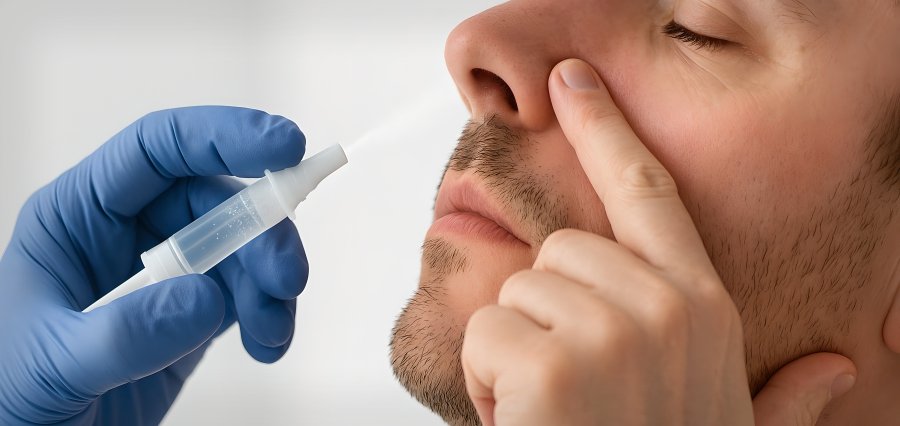
- A new nasal spray vaccine developed by Stanford University could protect against coughs, colds, flu, and even some bacterial infections.
- The approach is different from traditional vaccines and may offer broader, faster protection against various respiratory diseases.
Key Facts:
- Early-stage research published in Science showed strong results in animals, but human clinical trials are still required.
- The vaccine works by activating immune cells in the lungs, helping the body respond quickly to different infections instead of targeting just one.
Background:
Scientists at Stanford University have developed an experimental nasal spray vaccine that could protect against a wide range of coughs, colds, flu viruses and even certain bacterial lung infections. Early research published in the journal Science showed promising results in animals, but the team says human trials are still needed.
For more than two centuries, vaccines have followed the principle first introduced by Edward Jenner, where each shot protects against a single disease, such as measles or chickenpox. The Stanford team describes its method as a “radical departure” from that model.
Instead of teaching the body to recognize one pathogen, the nasal spray places immune cells in the lungs on high alert. It stimulates white blood cells known as macrophages and keeps them ready to respond quickly to invading germs. Researchers found that this heightened state of readiness lasted about three months in animal tests.
According to the study, the vaccine reduced the amount of virus entering the lungs by 100 to 1,000 times. Even when some viruses passed through, the rest of the immune system reacted much faster than usual. Professor Bali Pulendran, who led the research, said the approach could offer protection not only against flu and Covid viruses, but also against many other respiratory viruses and several types of bacteria.
The team reported protection against bacterial species, including Staphylococcus aureus and Acinetobacter baumannii. Researchers also observed a reduced reaction to house dust mite allergens, which are known to trigger asthma.
Experts not involved in the study welcomed the findings. Professor Daniela Ferreira of the University of Oxford described the research as “really exciting” and said it could mark a major step forward if human trials confirm the results.
While the vaccine remains in early development, scientists believe it may reshape how doctors prevent common respiratory infections in the future.